Service
Environmental Site Remediation
Industry
Land Development and Construction
PROJECT LOCATION
The Couchiching First Nation, located in the Rainy River District near the town of Fort Frances in northwestern Ontario.
PROJECT DATE
March 2023 to June 2024.
QUANTITY
N/A
CHALLENGES
The remediation required rigorous monitoring at every stage due to the very nature of the contaminants—dioxins and furans—which can easily disperse during handling. Strict measures were therefore essential to prevent their dispersion during the excavation, handling, and transport of soils and materials.
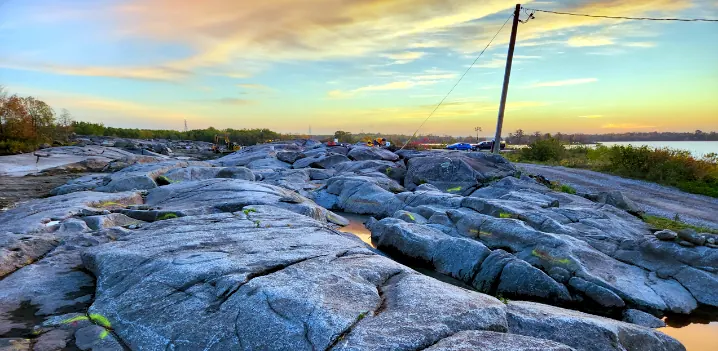
Adding to this complexity were particularly demanding site conditions: working in water-saturated soil, thoroughly decontaminating and cleaning an irregular and rugged bedrock, and meeting an extremely strict remediation standard of 7 pg/g Total Toxic Equivalency (TEQ) for dioxins and furans.
BACKGROUND
From 1904 to 2000, the properties in question were used for various industrial purposes, including sawmills, wood processing facilities, seaplane bases, and an asphalt plant—all located on the territory of the Couchiching First Nation.
Since 1993, several environmental studies had identified areas of potential concern. A large amount of debris—both buried and on the surface—originating primarily from past industrial activities had been identified: sawdust, bricks, wood, glass, plastic, steel, metals, and concrete.
Previous studies had also detected soil contaminant concentrations exceeding the site-specific target thresholds for residential use, as well as non-hazardous waste materials. The contaminants and materials of concern included dioxins and furans, polycyclic aromatic hydrocarbons, petroleum hydrocarbons C10 to C50, and residual materials.
The remediation and management of the contaminated soil was divided into several phases. Sanexen, a contractor specializing in environmental remediation, carried out the first phase.
Solution
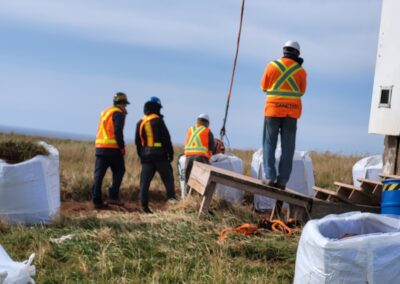
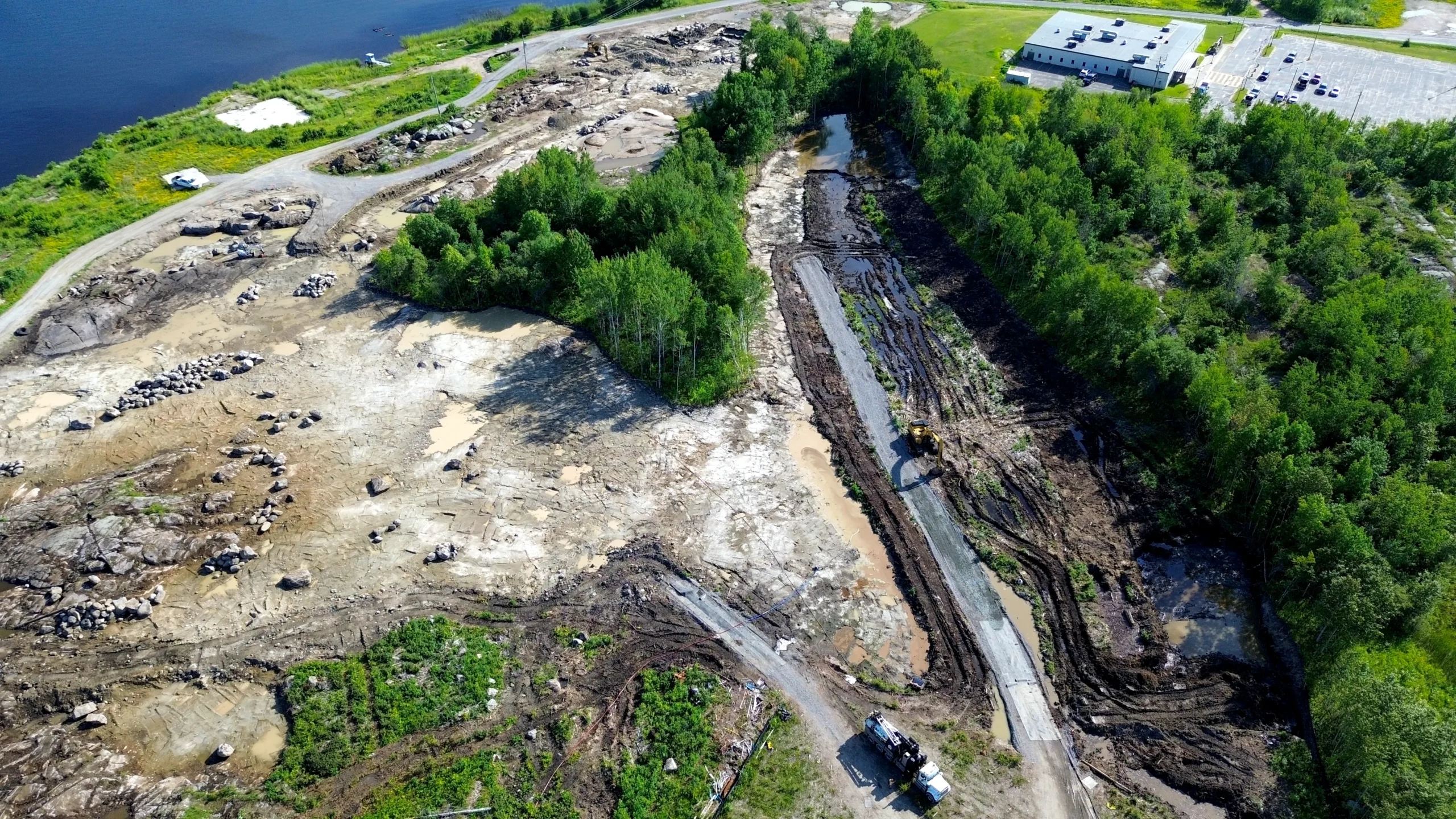
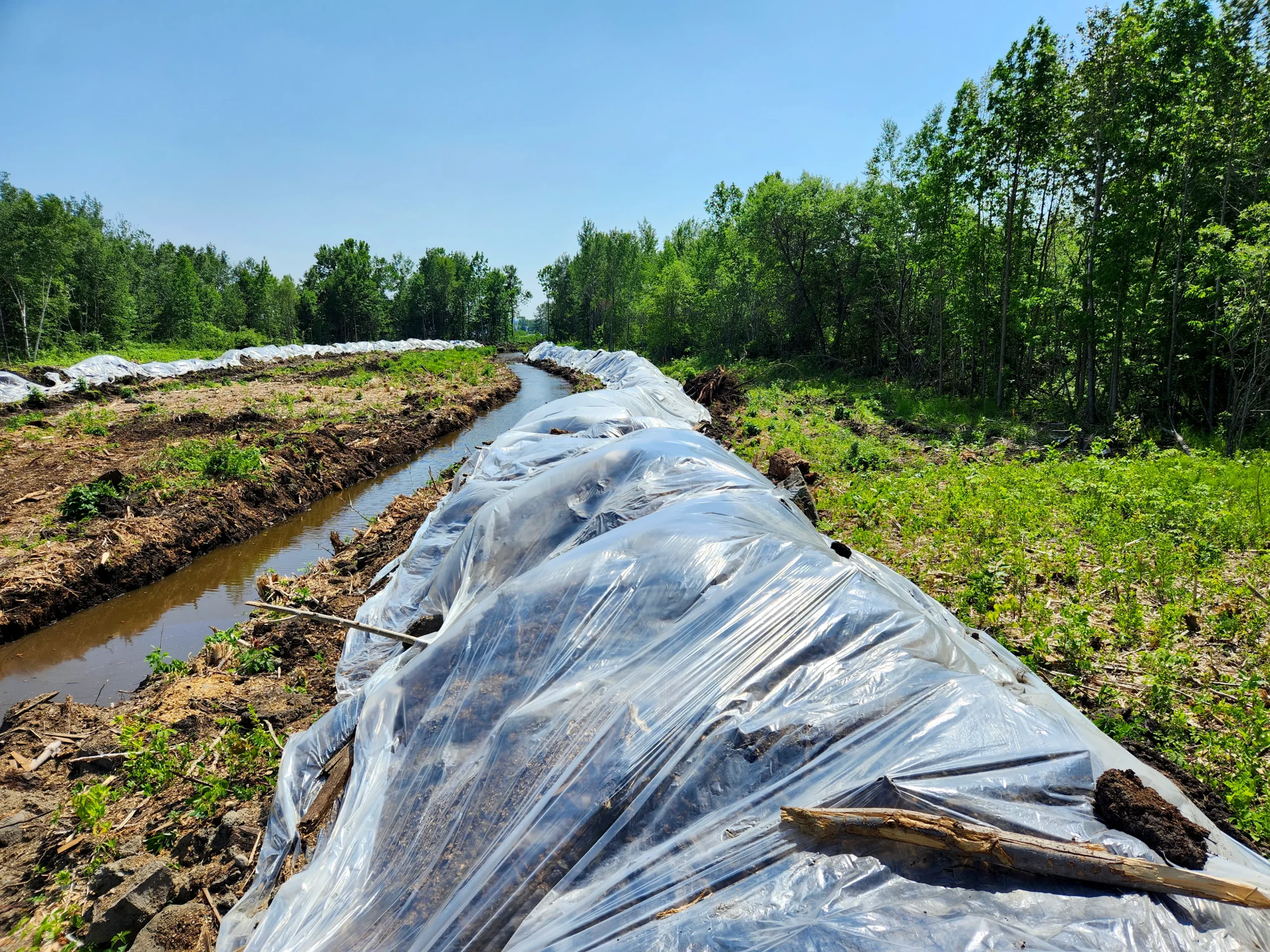
Work began with clearing 22,500 m², including felling and processing trees as well as transporting and disposing of organic material. A total of 90 groundwater monitoring wells were also decommissioned.
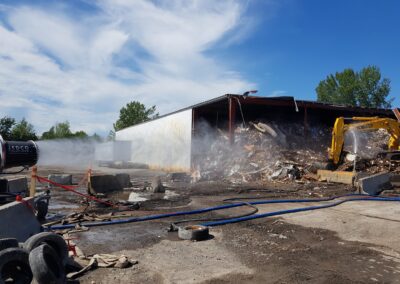
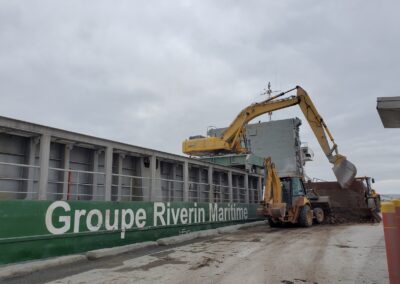
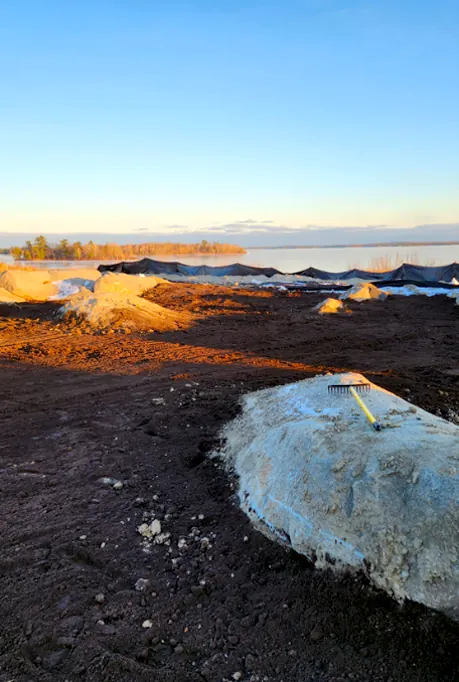
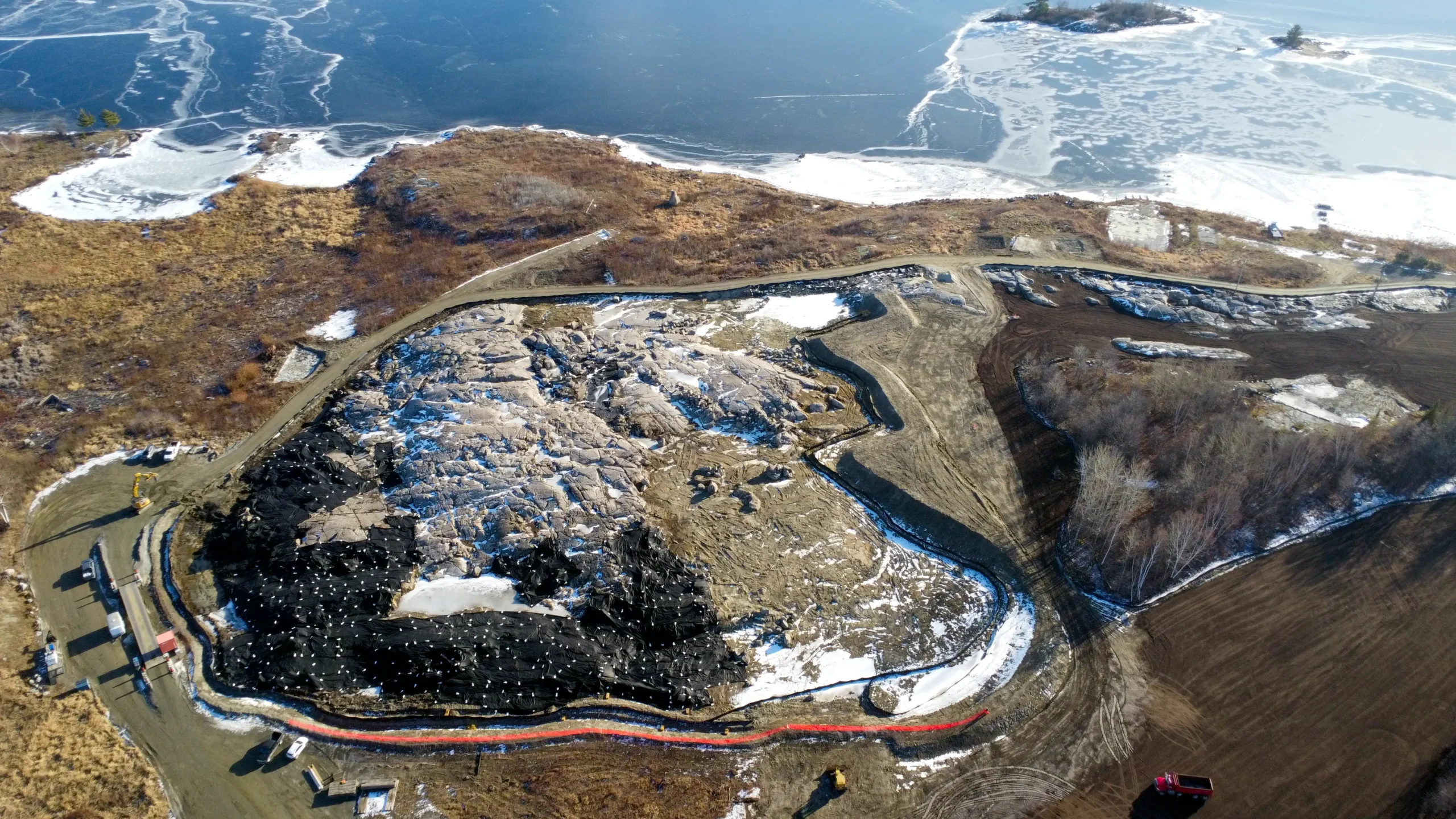
The teams then excavated, managed, and transported 60,200 metric tons of soils contaminated with dioxins and furans, along with residual materials, to authorized sites. The contaminated soil was disposed of at a local landfill, with support provided to the landfill operator during operations.
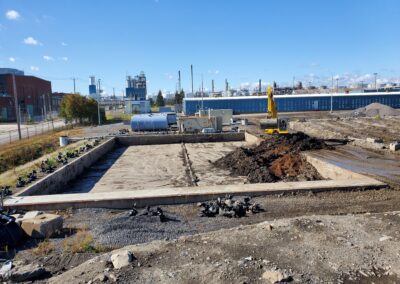
Approximately 25,000 m² of uneven and rugged bedrock was cleaned. An initial manual cleaning was followed by a final high-pressure wash. A closed-loop water treatment system, fed by two pumping systems equipped with sand filters, allowed water to be reused within the closed loop.
The excavation was backfilled with more than 40,000 metric tons of imported material. Final grading included hydroseeding nearly 13,600 m². The project also included the construction of parking infrastructure, including 114 metres of storm sewer lines.
Involvement of the Couchiching First Nation community was essential to the project’s success. From the outset, Sanexen prioritized an approach based on collaboration, active listening, and meaningful community participation. Carrying out the work in partnership with Aki Contracting, a Couchiching First Nation-owned company, allowed Sanexen to combine its technical expertise in environmental remediation with the community’s knowledge of the territory, local experience, and priorities. This collaboration facilitated efficient execution while contributing to local capacity building, knowledge transfer, and the creation of lasting benefits for the community. It illustrates the importance of involving First Nations as true partners in planning and implementing projects carried out on their territory.
HIGHLIGHTS
- Excavation, management, and transport of 60,200 metric tons of contaminated soils and waste materials to authorized sites.
- Disposal of contaminated soils at a local landfill, with support extended to the operator.
- Work conducted in areas with saturated soil.
- Intensive cleaning of approximately 25,000 m² of bedrock.
- Compliance with a remediation criterion of 7 pg/g Total Toxic Equivalency for dioxins and furans.
- Closed-loop water management using two pumping systems with sand filters.
- Backfilling of the excavation with more than 40,000 metric tons of imported material.
- Hydraulic seeding of nearly 13,600 m².
- Clearing of an area of 22,500 m².
- Decommissioning of 90 groundwater monitoring wells.
- Construction of 114 metres of storm sewer lines.
HAVE A PROJECT IN MIND?
Let's connect!