Service
PFAS Removal Solutions
Industry
Government
PROJECT LOCATION
Lac-Mégantic, Quebec
PROJECT DATE
2013
QUANTITY
11,360,000 gallons of water treated
CHALLENGES
- The situation required a quick mobilization of equipment on the site of the disaster.
- 8,700 gal of concentrated AFFF used to put out fire.
Mobile units that operated 24/7 were needed to treat the water quickly and efficiently. - An effluent monitoring program was implemented by the State Ministry of Environment (ministère du Développement durable, de l’Environnement, de la Faune et des Parcs (MDDEFP)). The treatment objectives established by the MDDEFP were 1 mg/L for petroleum hydrocarbons (C10-50), with specific criteria for individual MAHs and PAHs.
BACKGROUND
One of the worst disasters in Canada’s recent history occurred in July 2013: a train transporting crude oil derailed, leading to the spill and fire of 2.1 million gallons of oil in downtown Lac-Mégantic, causing the death of 47 people.
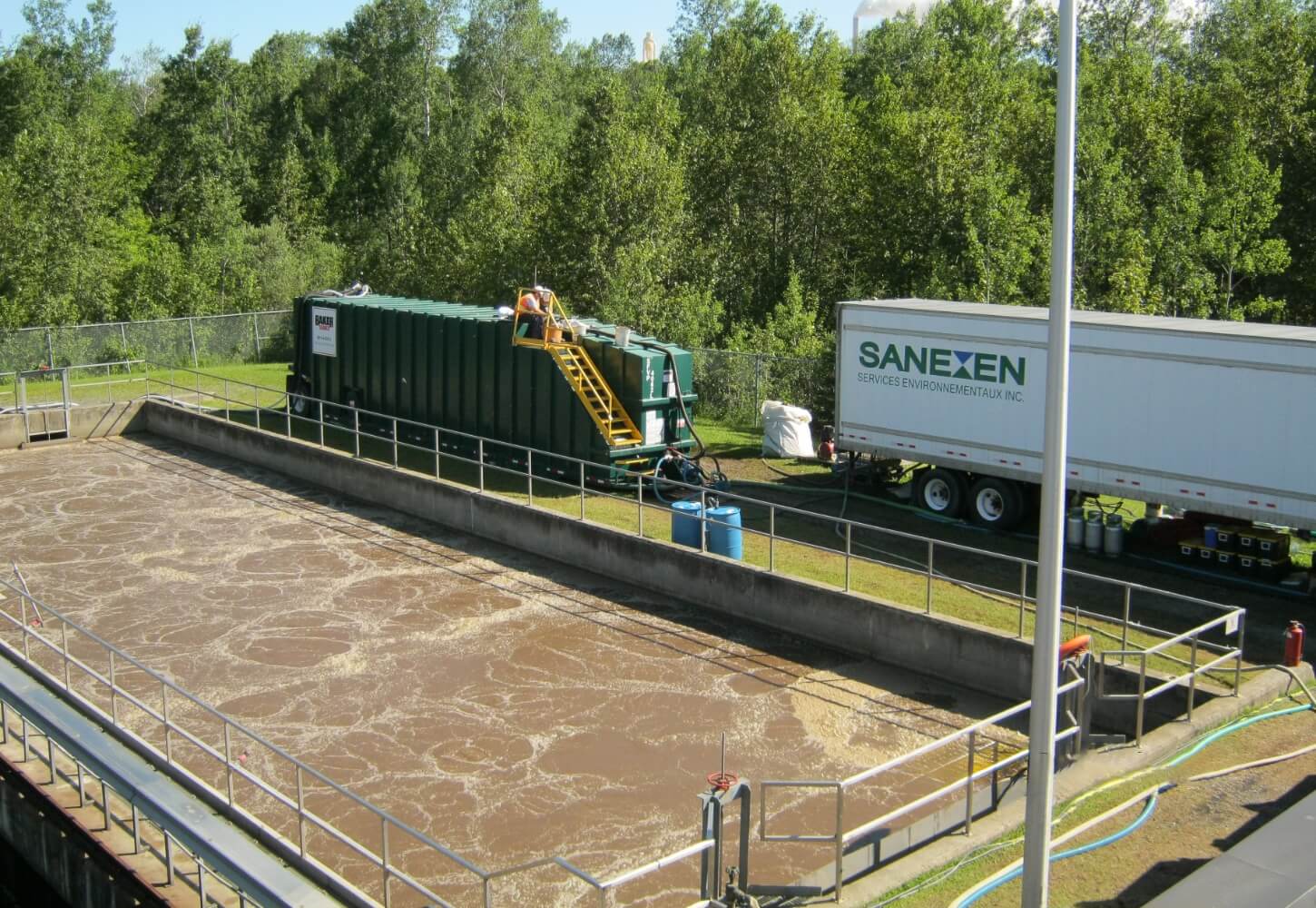
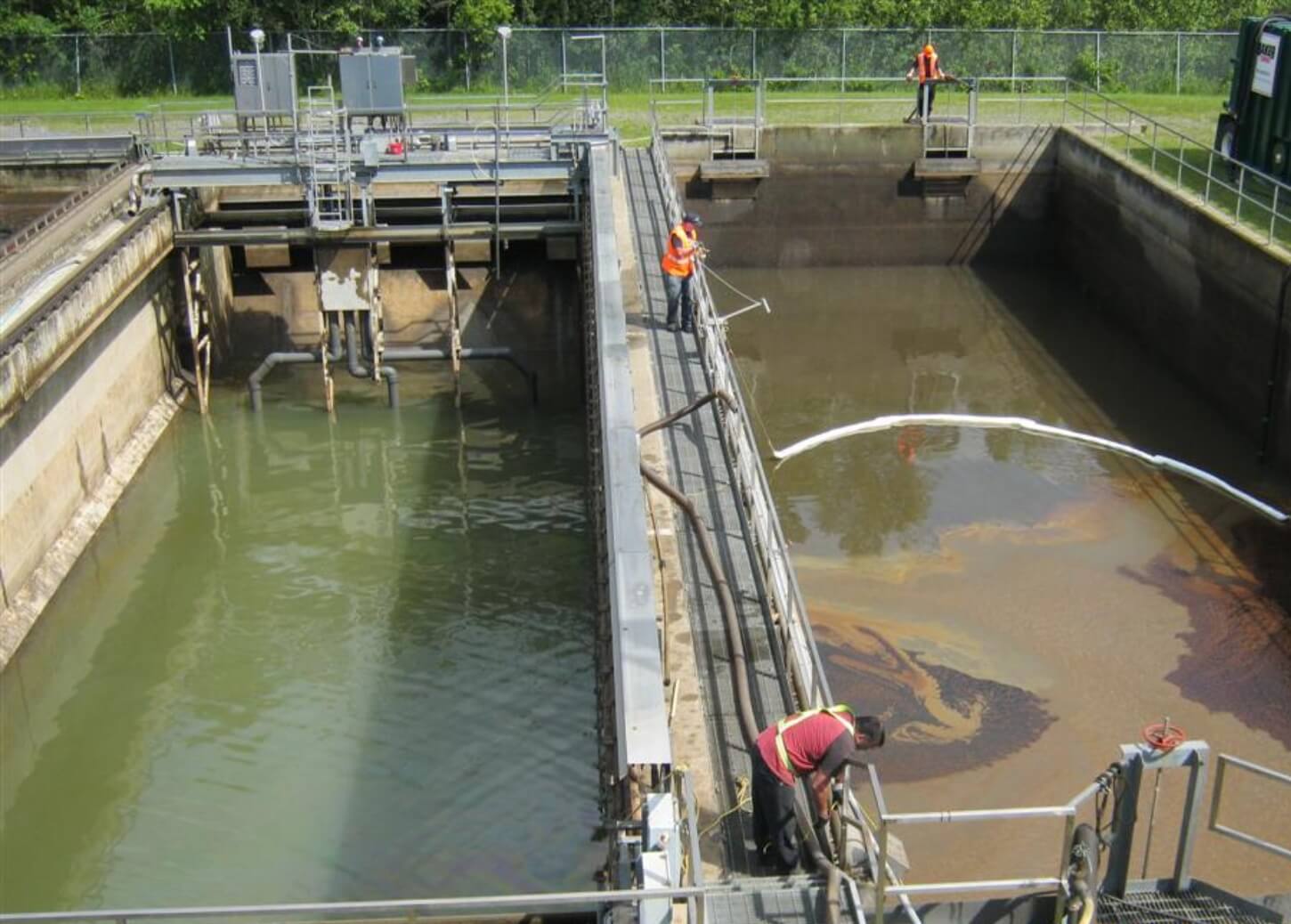
Some of the spilled oil seeped into the sewer system and reached the municipal wastewater treatment tanks, which temporarily suspended treatment operations. ALTRA | SANEXEN was mandated to provide emergency mobile water treatment units to clean the tanks and allow municipal water treatment to resume. All of the contaminated water from the disaster area was also treated as part of the project.
Solution
ALTRA | SANEXEN mobilized its water treatment equipment within 48 hours following the accident and increased the treatment capacity of the units within the first week from 50,000 GPD to 260,000 GPD.
Toxicity tests (fathead minnows, Daphnia Magna and rainbow trout) were also conducted on the treated water to verify the quality prior to discharge into the Chaudière River. The following processes were used:
- Gravity separation (with or without coagulation/flocculation)
- Filtration
- Chemical oxidation
- ULTRASORPTION™ (a proprietary media for nonsoluble hydrocarbons)
- Adsorption
HIGHLIGHTS
The treatment had an average removal efficiency of 99% of PFAS contaminants, from the AFFF. Contaminated water from the site clean-up activities and from the contaminated sewer network was transported to the wastewater treatment plant.
- From July 9 to October 25, 2013, 9.8 million gallons of water were treated. The treatment units were then relocated to the downtown area, alongside the derailment site, to further treat contaminated water.
- Between November and December 2013, another 1.6 million gallons of water (rainwater and wash water from the derailment site) were treated.
- The pretreatment separation process generated approximately 40,000 gal of oil and 264,000 gallons of sludge, which were disposed of in authorized facilities.
In total, ALTRA | SANEXEN treated 11.4 million gallons of hydrocarbon and AFFF-contaminated firewater using a combination of Foam Fractionation and Media Filtration, achieving 99.6% removal of Total PFAS (500,000 ng/L, down to 80% removal of PFOA.
HAVE A PROJECT IN MIND?
Let's connect!