Service
Industrial Effluents Treatment, Dredging, Dewatering & Lagoon Cleaning
Industry
Manufacturing
PROJECT LOCATION
Laterrière, Saguenay, Quebec
PROJECT DATE
June 2022
QUANTITY
2,375 m3 of water treated
CHALLENGES
A 20,000 m3 sedimentation lagoon had to be dredged and the water from the dredging had to be treated to lower its fluoride and aluminum content 6 days a week, 24 hours a day, in order to keep pace with the dredging.
BACKGROUND
In June 2022, Rio Tinto Alcan and the engineering consulting firm BBA contacted SANEXEN to urgently treat the water resulting from the dredging of sludge from the sedimentation lagoon located at the end of the Rio Tinto Alcan process plant in Laterrière, Saguenay, Quebec.
Solution
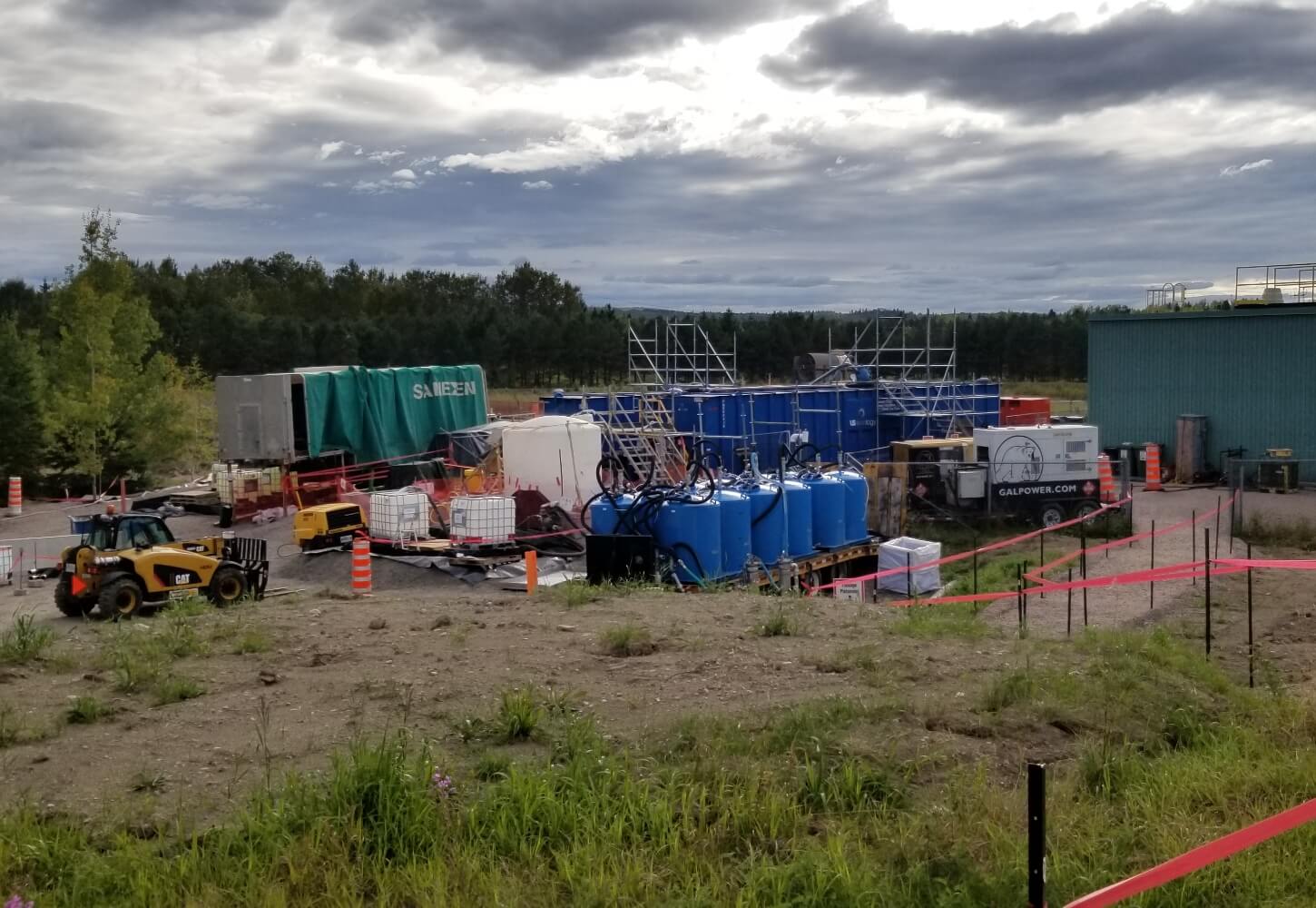
Implementation of the treatment process tested in the laboratory by BBA withing 2 months, and design and mobilization of a mobile treatment plant with a treatment capacity of 35 m3/h of contaminated water.
Monitoring of the process program and quality of the treated water, in accordance with the customer’s requirements. The treatment objectives set by Rio Tinto Alcan were 20 mg/l total fluoride and 1.5 mg/l total aluminum. The treated water was analyzed on site twice every 12-hour shift and was also analyzed by an accredited laboratory over a 24-hour period to verify its quality.
The following technologies were used:
- Decantation
- Defluoruration by the Nalgonda method (addition of lime milk)
- Coagulation
- Neutralisation with addition of acid
Aluminum chelation (MetalsorbTM) - Filtration
- Fluorine adsorption on activated alumina
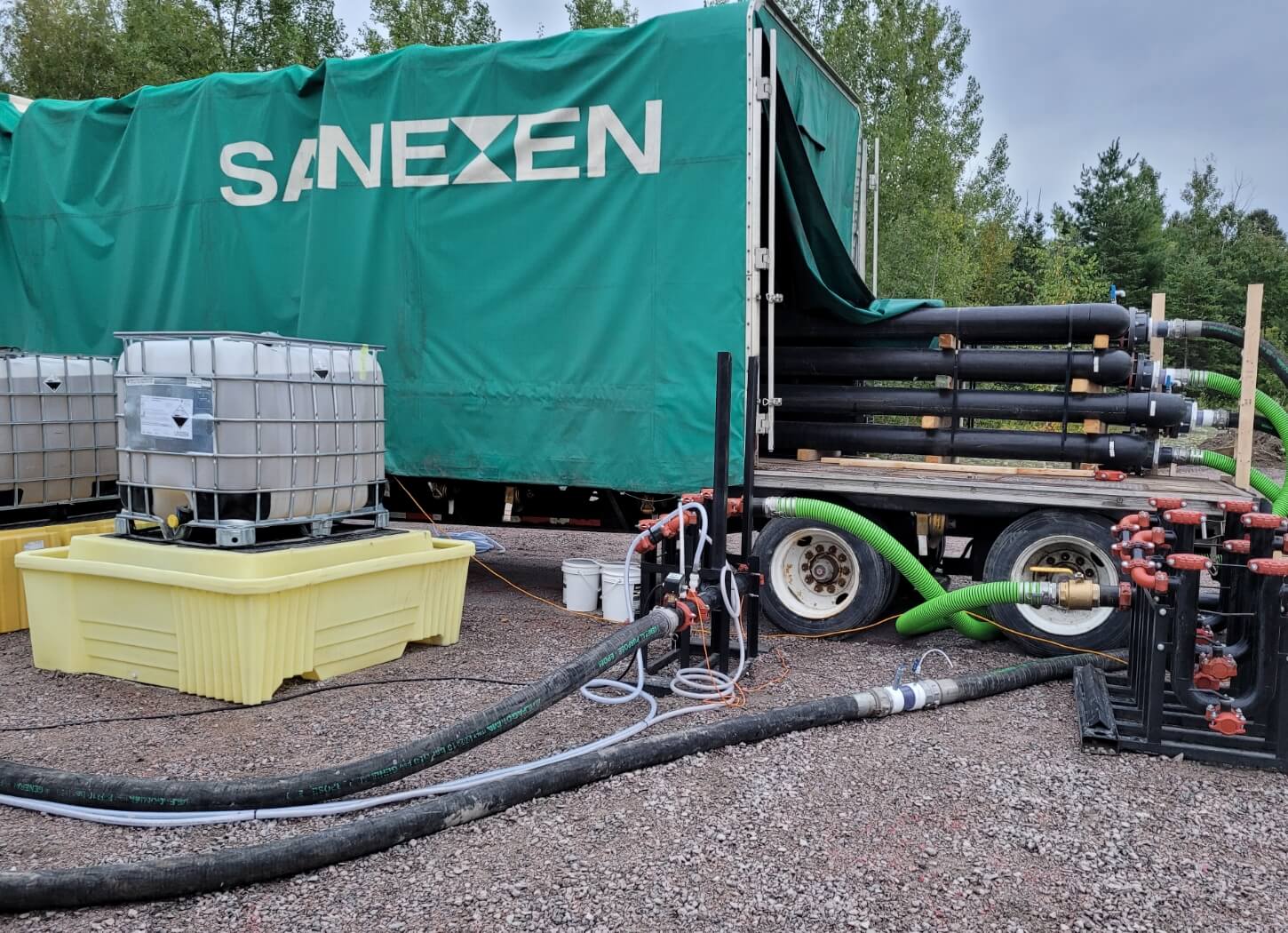
The dredged water and sludge from the sedimentation lagoon was centrifuged and the water was sent directly to the primary decantation tank of the water treatment process. The addition and mixing of the chemical reagents was done directly in the pipes using a mobile and compact mixing coil assembly designed specifically for this project. Secondary decantation took place in a tank immediately after mixing, avoiding the release of sludge into the tank during maintenance. The treated water was then returned to the sedimentation tank.
A total volume of 2,375 m3 of contaminated water was treated during the project.
HIGHLIGHTS
- A total volume of 2,375 m3 of contaminated water was treated during the project.
HAVE A PROJECT IN MIND?
Let's connect!