Service
Dredging, Dewatering & Lagoon Cleaning
Industry
Government, Waste
PROJECT LOCATION
Oregon, United States
PROJECT DATE
2023-2025
QUANTITY
- 2023: 1,815 dry tons of biosolids removed in total (1,200 dry tons originally planned + 615 additional dry tons).
- 2025: 2,000 dry tons of biosolids removed.
- Total Volume Extracted (2023 & 2025): 3,815 dry tons.
- Physical Scope: 3 wastewater treatment lagoons targeted (primary lagoon, secondary lagoon, tertiary lagoon).
- Schedule Savings: Completed over 60 days ahead of schedule (2023 scope).
CHALLENGES
Remove solids from the lagoons to increase treatment capacity for the system to allow flexibility to manage the treatment operations during major upgrades in the near future.
BACKGROUND
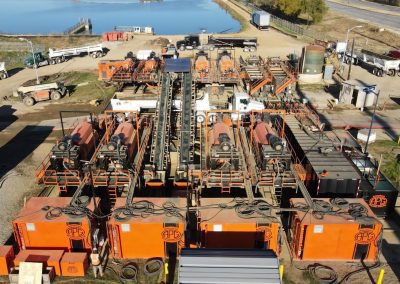
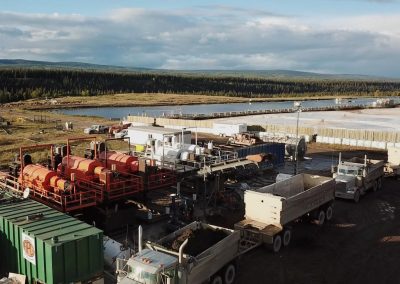
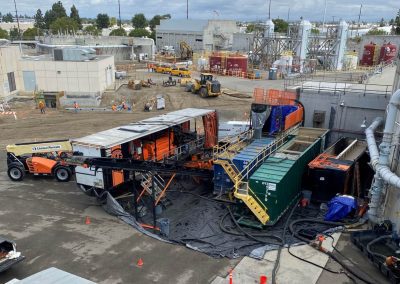
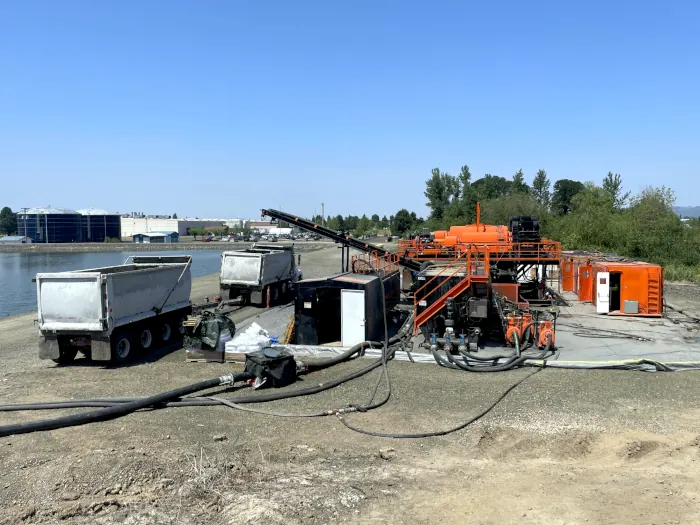
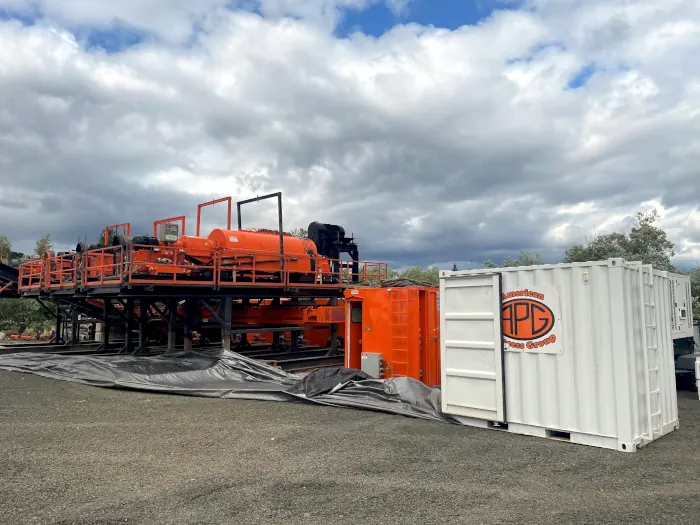
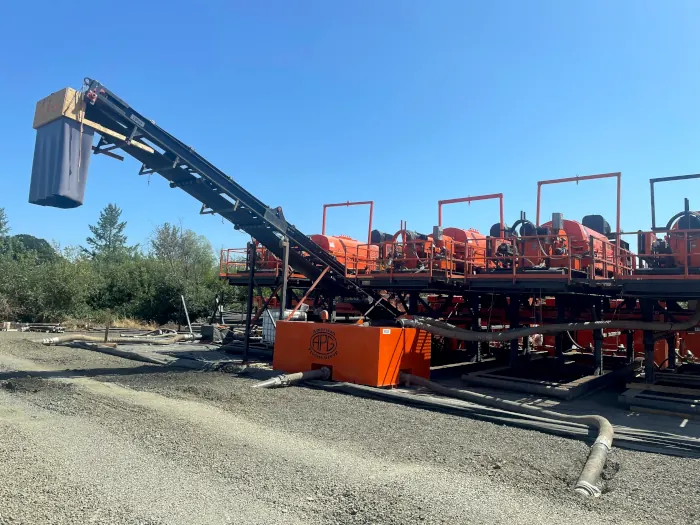
Dredged, dewatered, transported, and disposed of 1,200 dry tons of biosolids from the second and third lagoons at a small-town wastewater lagoon system in Oregon in 2023. The lagoon system had not been dredged since the early 1960s and had a significant biosolids accumulation in 3 lagoons, with a planned system upgrade in the next 3 years.
Solution
Through site investigation, APG determined the third lagoon had virtually no biosolids, and the second lagoon had more than the expected 1,200 dry tons. APG was able to remove an additional 615 dry tons from the lagoon due to cost savings from other bidders in the original proposal, and the project was finished more than 60 days before the required completion date for the City.
In 2025, APG returned to remove 2,000 dry tons from the primary lagoon in the system to help eliminate a major odor problem caused by the high amount of biosolids build-up in that lagoon. This also helped prepare for the major system upgrade, adding a headworks screen and new aeration.
HIGHLIGHTS
- Long-standing Infrastructure Neglect: No dredging operations conducted since the early 1960s (approximately 60 years of sludge accumulation).
- Actual vs. Estimated Distribution: Lagoon 3 contained virtually no biosolids, whereas Lagoon 2 significantly exceeded initial projections.
- Cost Efficiency: Lower pricing relative to competing bidders allowed for the extraction of additional volume within the original budget scope.
- Schedule Performance: Work completed more than 60 days ahead of the municipality’s mandatory completion deadline.
- Dual Operational Value: Interventions addressed immediate operational issues (odour control) while facilitating upcoming major upgrades (installation of a headworks screen and a new aeration system).
HAVE A PROJECT IN MIND?
Let's connect!