
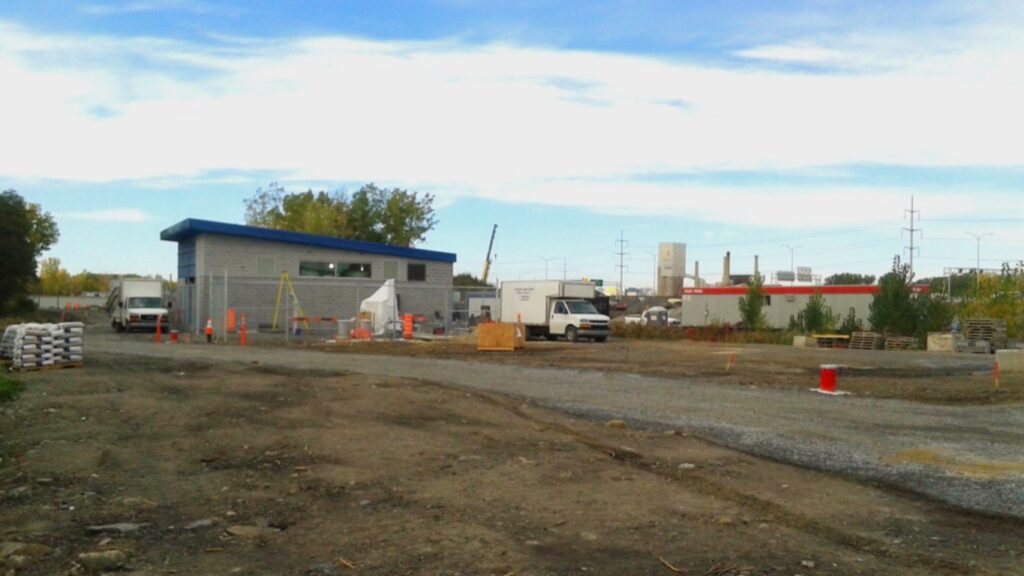
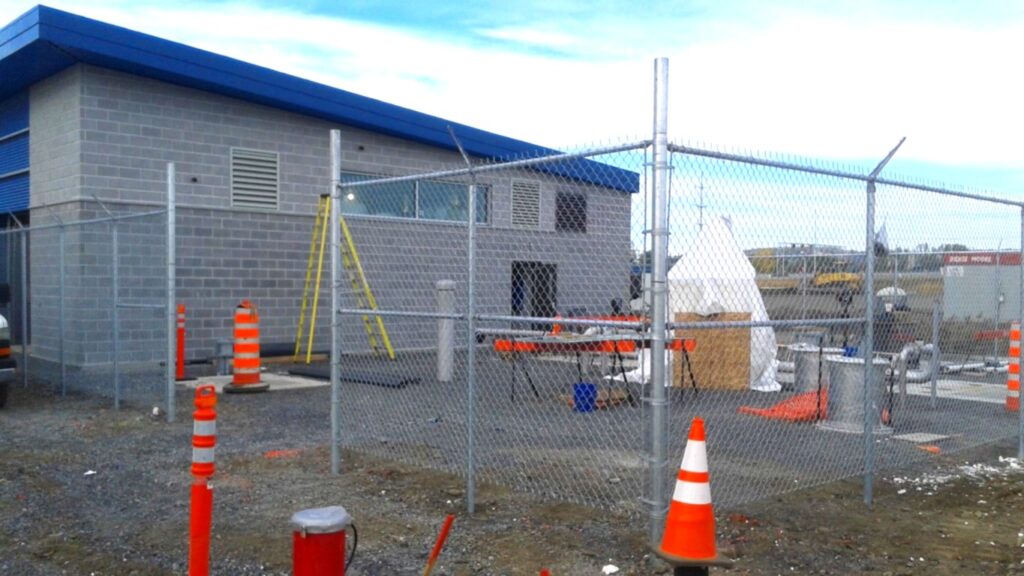
In partnership with Les Ponts Jacques-Cartier et Champlain Incorporée (PJCCI) and the Quebec’s mMinistère de l’Environnement, de la Lutte contre les changements climatiques, de la Faune et des Parcs (MELCCFP), Sanexen has been carrying out since 2013 a large-scale project involving the design, construction, operation, and maintenance of a groundwater pumping and treatment system for lands located between Highways 15 and the Bonaventure Expressway (Sections 2 and 12), along the St. Lawrence River in Montréal.
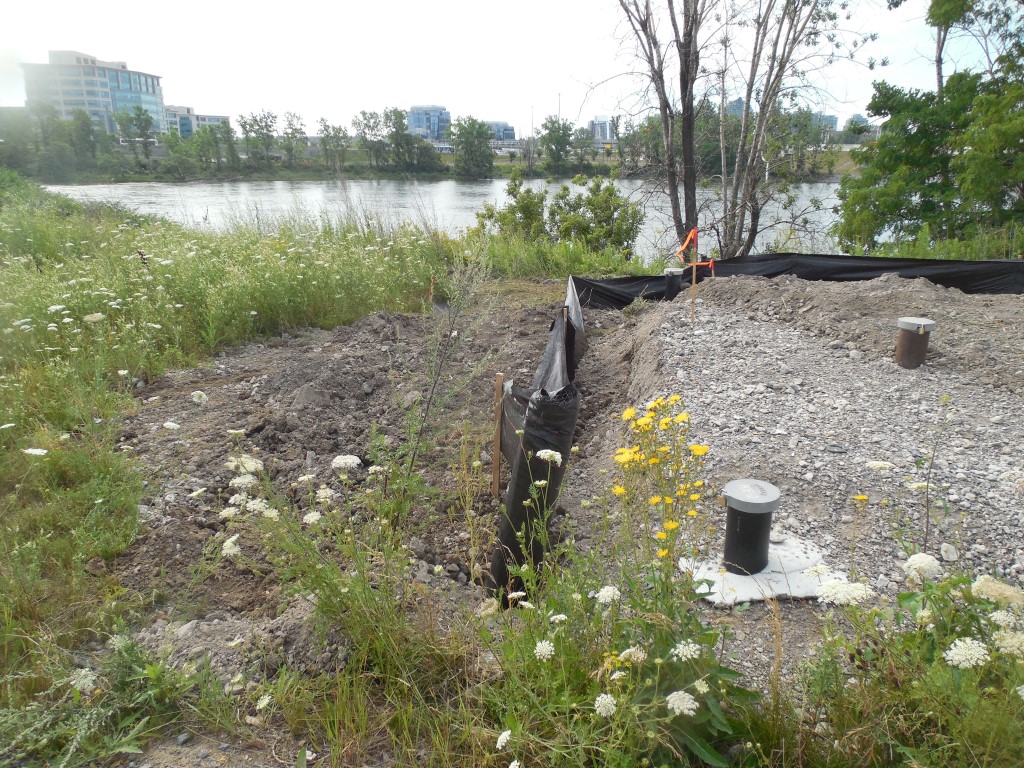
Historically, this area was used as a disposal site between 1879 and 1980. Significant quantities of residual materials from various sources (household, industrial, construction materials, etc.) were buried there. As a result, some groundwater may contain contaminants capable ofthat can affecting water quality and aquatic ecosystems when it discharges naturally discharging into the river.
The project therefore aims to intercept this groundwater before it reaches the receiving environment, treat it appropriately, and ensure long-term hydraulic containment.
- Project Objectives
The primary objective is to implement an effective hydraulic barrier to control groundwater flow and prevent its migration toward the river. The captured water is then directed to a treatment system designed to meet stringent environmental performance requirements.
Two guiding principles underpin the project:
• Ensure hydraulic containment by maintaining controlled drawdown of the water table.
• Guarantee the quality of discharged water by meeting applicable criteria through treatment adapted to the contaminants present.
- Containment Methods
Containment relies on a hydraulic barrier composed of 31 pumping wells distributed along a 1.2-kilometre stretch. This system creates a continuous capture zone that intercepts groundwater before it resurges into the river.
Containment performance is verified through a network of 67 instrumented monitoring wells that provide continuous piezometric monitoring. The data collected is used to confirm drawdown effectiveness and to adjust system operation as needed. This approach combines hydraulic engineering, instrumentation, and adaptive management.
Treatment Process
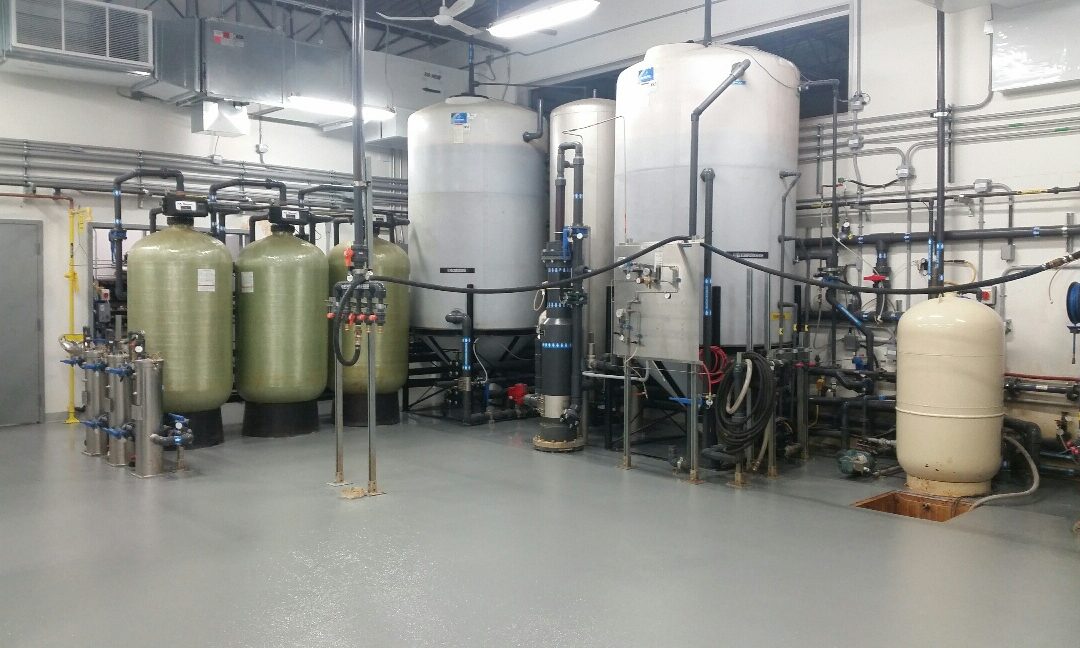
Pumped water is conveyed to a treatment unit and undergoes several complementary steps:
• Oxidation system to transform certain dissolved compounds;
• Sand filters to remove suspended particles;
• Sludge management system;
• Bag filters;
• Ultrasorption™ filter;
• Granular activated carbon (GAC) filter;
• Zeolite filters;
• Biological treatment using a Moving Bed Biofilm Reactor (MBBR) for the removal of ammoniacal nitrogen through nitrification. The biological process is a central component of the system. It promotes the conversion of ammonia into nitrates through the action of microorganisms attached to mobile media. Operations are supported by industrial automation and a data acquisition system that ensures continuous monitoring of operating and performance parameters.
3. Performance and Results
Since its commissioning, the system has treated an average of approximately 300 m³ of water per day. In total, more than 800,000 m³ of water has been treated since 2017, equivalent to roughly 320 Olympic-sized swimming pools.
This volume concretely illustrates the scale of efforts undertaken to protect the St. Lawrence River and ensure effective groundwater containment. Beyond treated volumes, the system’s environmental performance stands out for its consistency and robustness:
• Average nitrification efficiency of approximately 99.6% over the past five years;
• Ammoniacal nitrogen concentrations in treated water regularly below laboratory detection limits.
These results demonstrate a controlled, stable, and continuously optimized process. They also reflect the technical expertise mobilized by the project team and the reliability of the infrastructure implemented.
Through its durable and measurable performance, the system actively contributes to protecting the St. Lawrence River’s aquatic ecosystems while demonstrating the effectiveness of an integrated approach combining hydraulic containment, advanced treatment, and real-time monitoring.
4. Key Figures
• 31 pumping wells
• 67 monitoring wells
• 1.2 km hydraulic barrier
• 300 m³/day treated on average
> 800,000 m³ treated since 2013
• 99.6% average nitrification efficiency
5. Project Duration and Scope
The project is part of a long-term horizon plan, spanning from 2013 to 2031. It includes initial design, infrastructure construction, as well as system operation, maintenance, and ongoing optimization.
This initiative illustrates an integrated environmental management approach combining expertise in hydrogeology, water treatment engineering, and rigorous operational monitoring.
6. A Mobilization of Expertise
The project’s success relies on a multidisciplinary team of specialists in engineering, hydrogeology, operations, health and safety, and technical support. This collaboration ensures system performance, regulatory compliance, and the long-term protection of the St. Lawrence River.
Through this structuring initiative, Sanexen and its partners actively contribute to the preservation of aquatic environments and the responsible management of urban environmental liabilities.
